

Custom-made hotel furniture has become a strategic element within the hospitality industry. It is not just about creating visually appealing spaces, but also about developing functional, durable, and cost-effective solutions capable of withstanding heavy use for years.
The planning of hotel furnishings directly influences the guest experience, maintenance costs, and the establishment’s operational profitability. A poorly conceived design can lead to premature replacements, constant issues, and hidden costs associated with wear and tear, while a well-executed technical project optimizes resources and extends the furniture’s lifespan.
Industrial design applied to custom hotel furnishings
In contract projects, design cannot be limited to visual considerations; it must also take into account other factors such as ergonomics, structural strength, ease of maintenance, and logistical optimization.
When selecting furniture for hotels, it is essential to first assess how each piece will be used. Furniture for a standard guest room does not require the same features as that for common areas, restaurants, reception areas, or outdoor spaces.
Contract furniture for hotels allows you to:
- Greater resistance to wear and tear and continuous use.
- Efficient use of available space.
- Aesthetic consistency in guest rooms and common areas.
- Enhancing the guest experience through functional and comfortable designs.
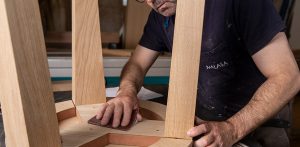
Precision Carpentry: Precision in Manufacturing and Assembly
Technical joinery for hotels is one of the cornerstones of custom hotel furniture manufacturing. Its role goes far beyond traditional carpentry work.
In large-scale hotel projects, even small dimensional deviations can compound and lead to significant operational problems. For this reason, technical manufacturing requires rigorous quality control protocols at every stage of the project.
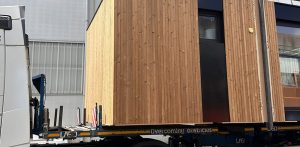
The use of automated machinery ensures consistent finishes, optimizes production times, and reduces human error. Additionally, modular prefabrication facilitates on-site installation, shortening completion times and minimizing interference with other project components.

Selection of materials and finishes for heavy-duty commercial use
The choice of materials is one of the most important factors in ensuring the durability of hotel furniture. Furniture must withstand impacts, frequent cleaning, humidity, temperature fluctuations, and high user turnover.
Selecting materials based solely on aesthetic criteria often results in higher maintenance and replacement costs in the medium term.
Among the most commonly used materials in technical woodworking for hotels are:
- High-density engineered panels.
- Phenolic compacts.
- High-performance HPL laminates.
- Stabilized engineered wood.
- Treated metal structures.
- Antibacterial and scratch-resistant surfaces.
The right combination of design, structure, and materials significantly extends the lifespan of the furniture, reducing the need for replacements and improving the return on investment.
Cost Optimization in Hotel Furniture Through Preliminary Design
Custom forniture doesn’t necessarily mean building every piece from scratch. One of the most efficient approaches is to combine customization with modular systems.
Modules allow you to:
- Reduce manufacturing costs by reusing components
- Simplify on-site assembly and installation
- Replace specific parts without having to replace the entire assembly
It is an effective strategy for optimizing costs. Designing standardized parts that can be adapted to different configurations helps reduce the number of part numbers, streamline production, and facilitate future restocking.
Summary of Key Technical Considerations for Hotel Furniture
Hotel furniture design requires a balanced combination of design, functionality, durability, and cost-effectiveness. The key to developing efficient contract projects lies in adopting a comprehensive technical approach.
Applying industrial design principles helps optimize manufacturing, installation, and maintenance. Technical joinery for hotels ensures precision and structural reliability, while the proper selection of materials guarantees adequate performance under intensive use.
In an industry like the hotel sector, investing in well-designed contract furniture solutions not only enhances the guest experience but also directly contributes to the business’s long-term profitability and sustainability. At Grupo Malasa, we’ve been in the industry for over 30 years and are suppliers of hotel furniture; you can view our hospitality sector projects.